The One-Ski-Method (OSM)
A Revolutionary Approach to Learning Skiing
The foundation of the One-Ski Method (OSM) is a surprising scientific insight (Kassat, 1985) into how ski turns actually work: it is not the skier who turns the skis – the slope turns the skis. This biomechanical understanding makes ski technique comprehensible for the first time and made it possible to develop a logical and systematic learning method from it.
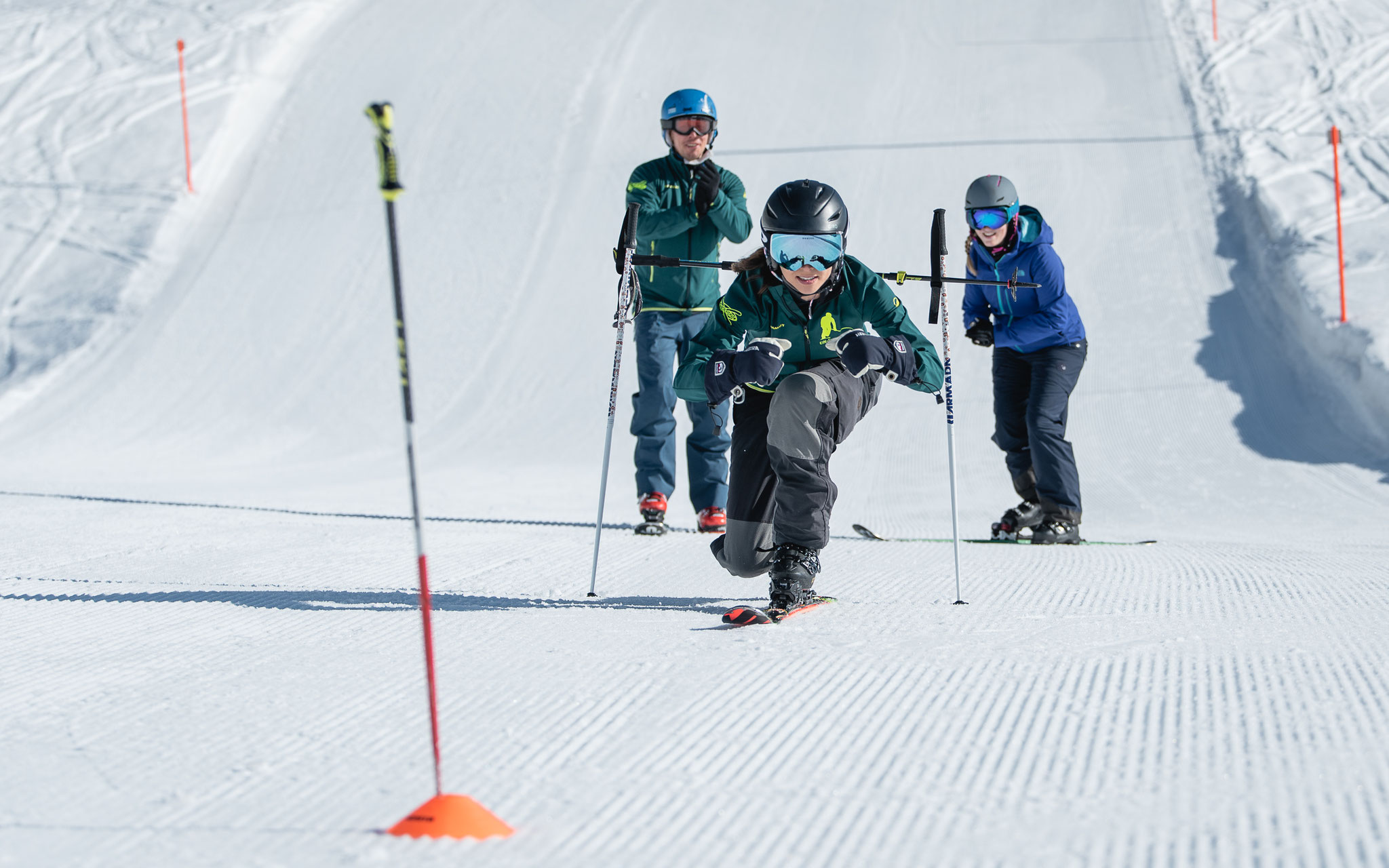
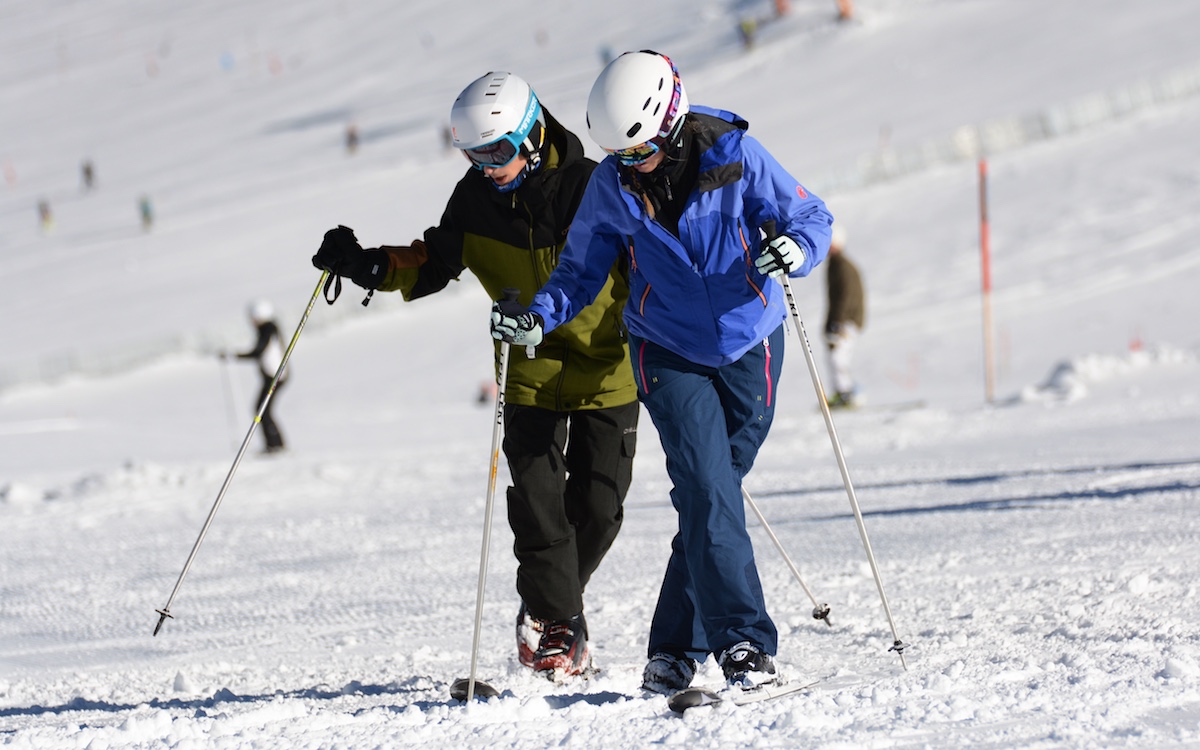
The result is the One-Ski Method – simple, clear, and effective. The ski-specific body position, all fundamental movements of ski technique, and the movement of the skis themselves are first practiced on a single ski (left and right) and then transferred to both skis. Using a simple long-pole makes this even easier.
The goal remains the same: parallel skiing. With the One-Ski Method, it is learned efficiently, quickly, and safely – the direct path to parallel skiing.






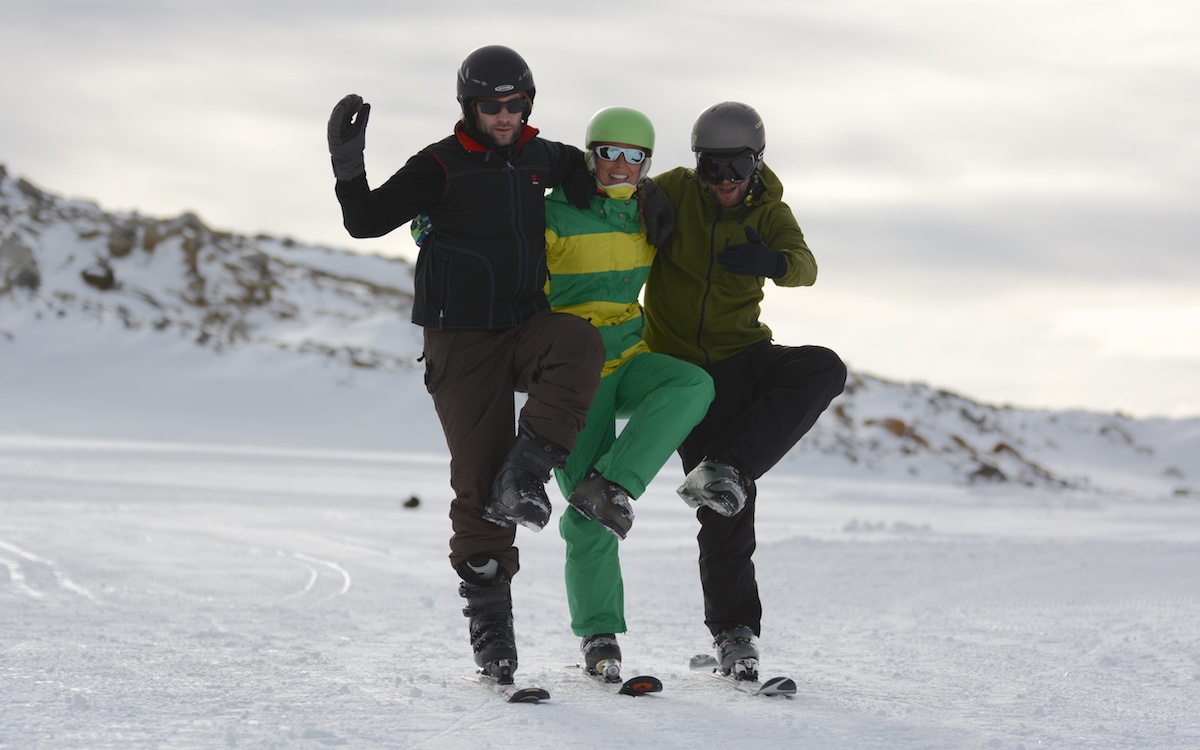

About the One-Ski-Method
The idea of teaching and learning skiing on one ski comes from the observation that controlling both skis simultaneously seems to be too challenging for beginners. Yet the OSM should not be misunderstood: training is not only on one ski, skills are taught on both skis. The advantages of the OSM can be summarized as follows:
- Safety: Learning on one ski and one supporting leg prevents falling and reduce the risk of injury
-
Economy: Practicing on one ski minimizes stepping up
- Training-effectiveness: The aid of a long-pole makes learning effortless and quick
- Transfer of learning: Learning on one ski, transferring the skills to two skis
- Inside and outside ski: Both sides are equally trained from the outset
- No Snowplough or stem: No troublesome learning detour needed
- Soft methods: Learning through sensory and motor skills
An important methodical aid: the long-pole
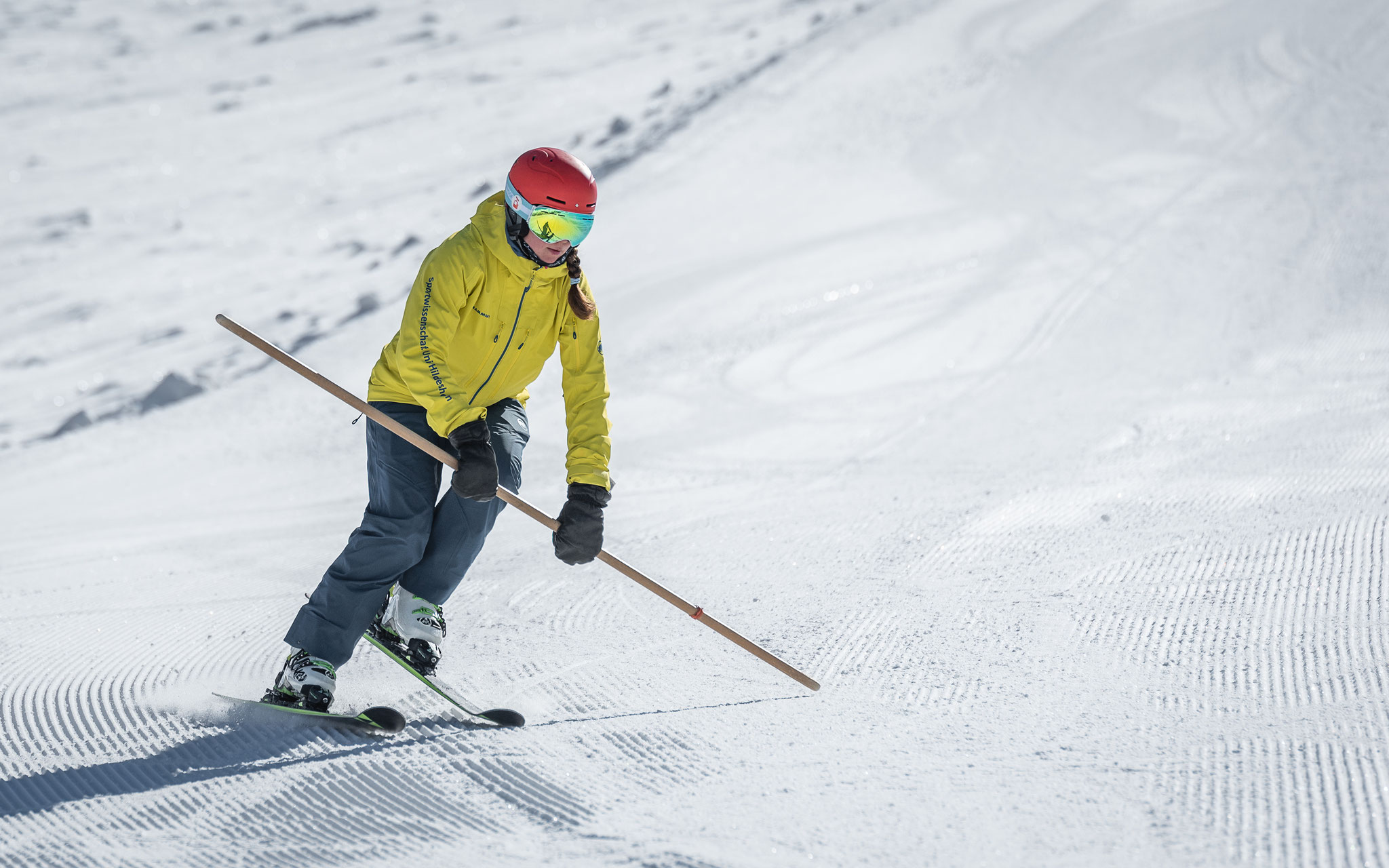
Using a long-pole for training seems to be simple, but it is very effective – as long as the pole is used in a specific way. One holds the long-pole in both hands,
drawing a thin line with its tip into the snow. This will ‘magically’ cause a turn. With practice, the turning of the ski starts even before the pole touches the slope. The long-pole makes
learning parallel skiing easy, and so beginners as well as advanced skiers will quickly progress. Regardless, basic training should never be neglected, and thus it is recommended to switch
between the long-pole and the ski sticks during class.
Methodical approach
The OSM has developed a range of practical training exercises that can be easily adapted to various slope conditions and school training courses. The selection of
exercises should be tailored to the individual needs and learning progress of each student. The method does not follow a rigid sequence from easy to difficult exercises but rather adapts to the
complex interplay of skiing technique, learning process, and individual situations. Slope conditions, student preferences, and specific learning objectives also influence the choice of exercises.
Short modules and frequent alternation between one-ski and two-ski training are recommended.
Practice
One-ski-method for all cases.
To effectively address the learning needs of each student, the One-Ski-Method provides a comprehensive collection of exercises that can be customized to suit
different ages and learning objectives. However, the selection and the pace of progression will vary based on individual circumstances. The pedagogical and didactic approach employed will also
determine how the exercises are introduced and executed.
For children, the exercises are designed to be engaging and fun-filled, leveraging the natural tendency of young learners to enjoy movement and exploration. Even seemingly simple exercises can be
enhanced with a playful element, making the learning process more engaging and stimulating.
Before embarking on teaching the exercises, it is essential for the instructor to gain hands-on experience with them. This practical understanding will ensure that the exercises are implemented
effectively and adapted to the specific learning needs of each student.
The One-Ski-Method: A Path to Healing for Children with Cancer
In the serene setting of the Kleinen Walsertal, Austria, a unique rehabilitation program has been offering hope and rejuvenation to children with cancer since 1994.
Founded by Dr. Walter Kurpiers of the University of
Münster, the One-Ski-Method has proven remarkably successful in helping these young patients regain their strength, confidence, and zest for life.
The harsh realities of cancer treatment often leave children physically and emotionally drained, and their parents are understandably protective and wary of subjecting them to further stress or exertion. However, the One-Ski-Method gently guides these children back to normalcy, encouraging them to rediscover their own abilities and trust their physical capabilities.
Unlike traditional skiing lessons, which involve balancing on two skis, the One-Ski-Method employs a single ski, reducing the initial demands on the child's
weakened body. The free standing leg provides stability and security, while gliding on one ski enhances balance and coordination. The use of a pole as a "mental support" further assists in
maintaining dynamic balance.
The focus of this rehabilitation program is not on athletic performance or physical demands, but rather on fostering a sense of joy and accomplishment through
movement. By avoiding setbacks and excessive expectations, the One-Ski-Method cultivates motivation and enthusiasm for continued learning and progress.
Under the continued leadership of Prof. Dr. Nico Kurpiers of the University of Hildesheim, the One-Ski-Method continues to empower children with cancer to overcome
the challenges of their illness and rediscover the simple pleasures of life.
Coming soon…
We are working intensively on the English translation of our book.
The publication is planned for the coming year, 2026. Stay tuned!
Discover the secret behind effortless ski turns – and learn to ski parallel faster than ever before.
The One-Ski Method reveals a groundbreaking insight into ski mechanics and transforms it into a simple, logical, and highly effective approach to learning. Clear,
intuitive, and science-based, this method empowers beginners and advanced skiers alike to master balance, movement, and control – first on one ski, then effortlessly on two.
The direct path to confident, parallel skiing starts here.
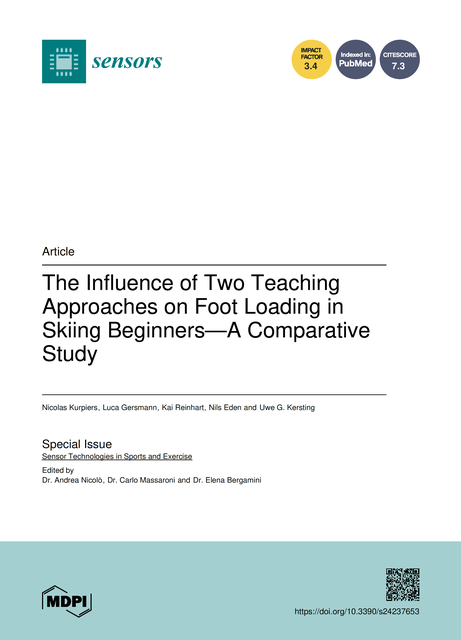
Latest Publication
MDPI, the international scientific online platform, has published our study, "The Influence of Two Teaching Approaches on Foot Loading in Skiing Beginners – A Comparative Study."
Kurpiers, N., Gersmann, L., Reinhart, K., Eden, N., Kersting, U.G. (2024). "The Influence of Two Teaching Approaches on Foot Loading in Skiing Beginners—A Comparative Study." Sensors 24 (23): 7653. https://doi.org/10.3390/s24237653.
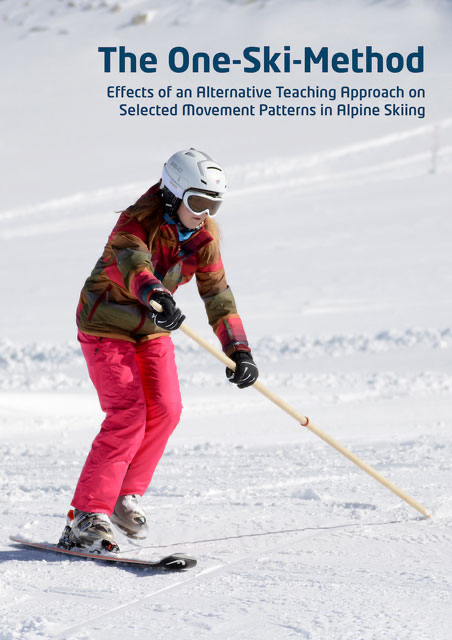
Publication
Teaching methods in skiing have marginally developed within the last decades. An intervention comparing the conventional approach (SP) and the One-Ski-Method (OSM) is proposed in which the main body actions are first trained on one ski and successively transferred to two skis. The OSM teaches the main body actions towards a proper position on parallel skis. The snowplow gets avoided as it implies obstructive body actions. Two groups were trained using each method. Video footage from the first and the fifth day were evaluated by experts following selected criteria. OSM learners showed significantly larger improvements compared to SP. Results indicate a faster acquisition of key elements of alpine skiing and provide a foundation for further investigations of the OSM method.